LTA Window Tint Rules Singapore: Are You Compliant — and Is Your Insurance at Risk?
Window tinting, or solar film as it's commonly known, is one of the most common car modifications in Singapore. It keeps the cabin cooler, reduces glare, and offers a degree of privacy. For many drivers, it is one of the first things they do after driving a new car off the lot.
But there is a detail that thousands of car owners in Singapore may be overlooking: if your window tint does not meet the Land Transport Authority's (LTA) requirements, you may be driving an illegally modified vehicle — and your car insurance in Singapore could be at risk the moment you need to make a claim.
Here is what you need to know.
What Are the LTA's Window Tint Rules in Singapore?
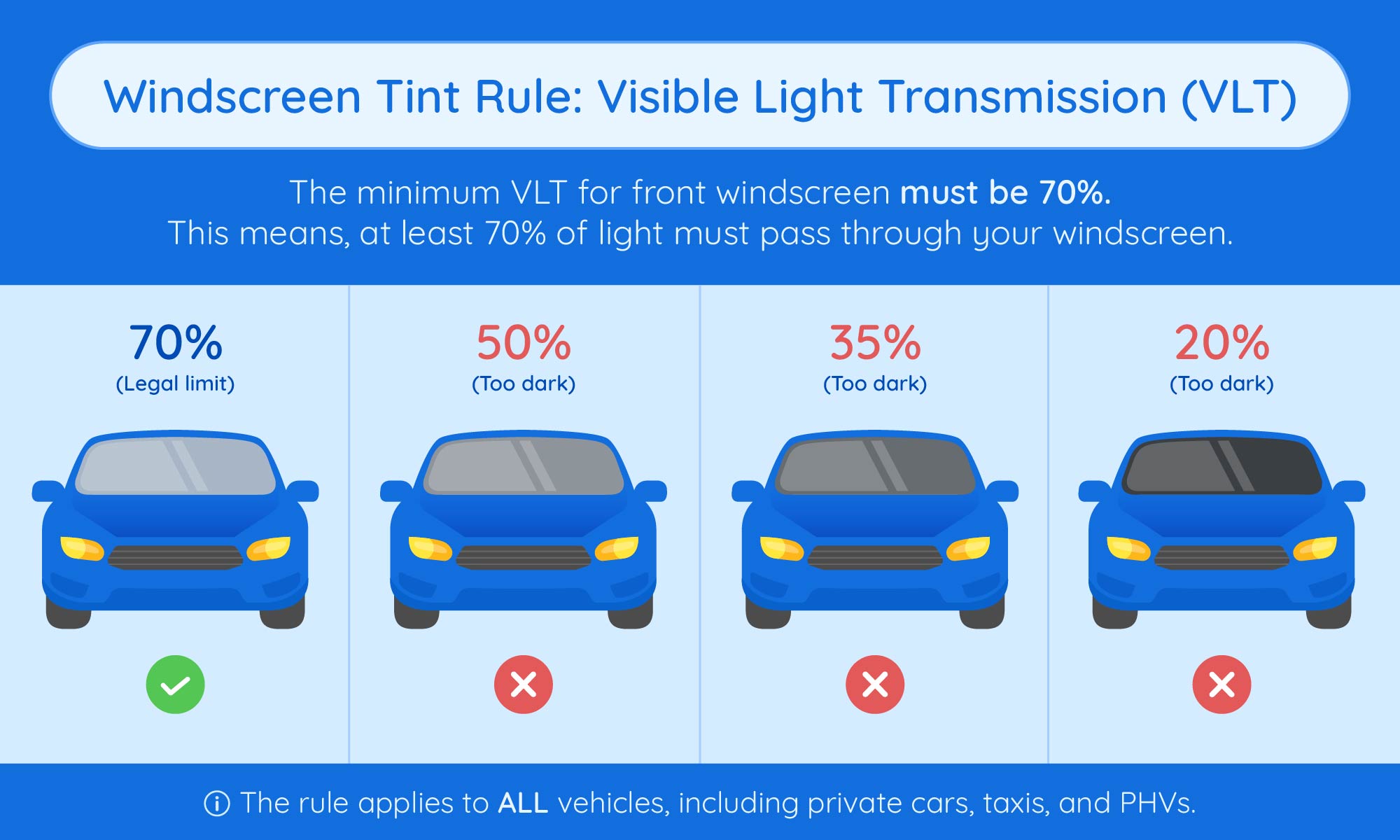
Under LTA's vehicle modification guidelines, tinted films and tinted glass are permitted on all vehicles registered in Singapore, but only within strict light transmission limits Visible Light Transmission (VLT) limits. VLT, which stands for Visible Light Transmission, refers to the percentage of visible light that passes through the glass. The higher the VLT, the clearer the window; the lower the VLT, the darker the tint. The rules apply to both aftermarket tinted films applied over existing glass and factory-fitted tinted glass. The requirements are:
| Window Position | Minimum VLT Required |
| Windscreen (Front Glass) | 70% |
| Front Side Windows | 70% |
| Rear Side Windows | 25% |
| Rear Windscreen | 25% |
These are not guidelines, but they are legal requirements. Tinting outside these limits constitutes an unauthorised vehicle modification under Singapore law.
How LTA Enforces Tint Rules
Enforcement happens at two key points: during your annual VICOM or STA inspection, and during roadside operations by Traffic Police. Either scenario can result in penalties.
Inspection Failures
Non-compliant tint will cause your vehicle to fail its periodic vehicle inspection. You’ll be required to remove or replace the film before your vehicle can be certified as roadworthy. Until you pass, you technically should not be driving the car and your insurer does not need to treat it as a legally operating vehicle.
Roadside Enforcement
Traffic Police conduct periodic checks, particularly targeting heavily tinted vehicles. If caught, you face fines and a direction to rectify the modification. Repeat offenders or drivers who fail to comply with rectification notices can face more serious penalties, including vehicle impoundment.
Car Insurance Singapore: Why This Matters
Here’s what most motorist don’t realise: If your car has an illegal modification at the time of accident, your car insurance policy may not protect you fully or at all.
Every motor insurance policy in Singapore contains a conditions clause that requires the insured vehicle to be maintained in a roadworthy condition and compliant with all application regulations. Illegal tint directly violates this clause. Here’s how it plays out:
Your Insurer May Void The Claim
When a claim is made, the insurer's claims surveyor typically conducts checks to ensure there are no illegal modifications. If non-compliant tint is discovered, this constitutes a breach of policy conditions, giving the insurer grounds to argue the vehicle was not in a legally roadworthy state and to repudiate the claim.
Policy Renewal Problems
An insurer that discovers a pattern of non-compliance, particularly through inspection failure records. This may increase your premiums, decline to renew your policy or add exclusions to future coverage.
Common Tint Mistakes Singapore Drivers Make
- Trusting the installer’s word: Many tint shops quote the film’s VLT rating, not the combined VLT of film plus your existing glass. These are not the same number.
- Applying tint over factory privacy glass: Some vehicles have rear windows with factory-applied privacy coatings. Adding aftermarket tint on top can push combined VLT well below the 25% minimum without the driver realising it.
- Using imported film not calibrated for Singapore regulations: Tint bought from overseas marketplaces may be graded to US, European, or Australian standards which differ from LTA’s thresholds.
- Assuming all ceramic or UV-rejection films are legal: Premium film types (ceramic, nano-ceramic, carbon) can still have VLT ratings below the legal minimum. The technology type doesn’t determine legality, the transmittance percentage does.
- Not getting a compliance certificate: Reputable tint shop will measure your glass’s baseline VLT, then measure again after the film is applied and give you the combined resulting in writing.
How to Check If Your Tint is Legal Right Now
You don’t need to wait for an inspection to find out if you’re compliant. Here are three practical steps:
Step 1: Get a VLT Meter Reading
Many petrol stations, auto workshops and tint shops in Singapore offer VLT measurement for a small fee or sometimes free. Note: The reading you need is the combined glass-plus-film figure, not just the film.
Step 2: Review your Tint Installer Certificate
If you kept the paperwork from your tint installation, check the recorded VLT values. If the numbers are close to the legal minimums, be aware that film can degrade over time. VLT can shift slightly as films age, particularly cheaper films exposed to Singapore’s intense UV environment.
Step 3: Ask Your Insurer Directly
It’s worth calling your car insurance provider and asking explicitly: “Does my policy cover claims if my vehicle is found to have a non-compliant modification at the time of an accident?” The answer should be in your policy wording, but getting it confirmed in writing is better.
What to Do If Your Tint is Non-Compliant
If you discover or suspect your current tint is below LTA's legal thresholds, act quickly. The longer you drive with non-compliant film, the longer your car insurance coverage is potentially at risk.
- Remove or Replace the Film: The cleanest solution is to have the non-compliant film professionally removed and replaced with one that produces a legal combined VLT. Do not simply add another layer on top — layering films only reduces transmittance further.
- Get a Post-Installation Certificate: After the new film is installed, obtain a written certificate from the installer confirming the combined VLT readings for each window. Keep this in your glovebox alongside your other vehicle documents.
- Notify Us So We Can Submit for Underwriter Review: This is a step many policyholders skip — and it matters. If you have made any modifications to your vehicle, including a change of tint film, you are required to inform us as your insurance intermediary. As long as the modifications are LTA-approved and pre-declared to us, they can be covered upon the insurer's review. Even a compliant modification needs to be on record.
Here is what to do:
- Obtain your post-installation certificate from the tint installer, confirming the combined VLT readings for each window.
- Contact us with the details — the type of film used, the installer, the VLT readings, and the date of installation.
- We will submit the modification details to the underwriter for review and endorsement on your policy. This ensures your coverage remains valid and that there are no grounds for a future claim to be disputed on the basis of an undisclosed modification.
- Keep a copy of the underwriter's acknowledgement with your vehicle documents as proof that the modification has been declared and accepted. This process is straightforward when modifications are compliant. The underwriter's review is typically a formality for legal tint — but it is a formality that protects you.
- If a Claim Is Open or Under Review: If a claim was made while your vehicle had non-compliant film, contact us once the issue is rectified. Singapore insurers generally respond more favourably to policyholders who proactively disclose and correct a problem. If a claim is currently open or under review, seek written clarification on whether the non-compliant tint affects your coverage before the matter is closed. Do not wait — delays in disclosure can complicate an insurer's assessment of your claim.
Conclusion
Window tinting may seem minor, but in Singapore it has real legal and insurance consequences. Non-compliant tint can lead to fines, inspection failures, and more importantly, problems with your car insurance if an accident occurs. Even unintentional non-compliance can put your coverage at risk.
Fortunately, this is easy to avoid. By checking your combined VLT readings and ensuring your tint meets LTA requirements, you protect both your vehicle and your insurance. If you are unsure about your tint or how it affects your policy, contact us for a quick review or advice. We are here to help you stay compliant and properly covered